The day began with the kind of quiet determination that often goes unnoticed by the world. Morning light filtered weakly through the diner’s narrow windows, casting pale reflections on chipped tables and worn vinyl seats. The hum of the refrigerator and the clink of cutlery formed a tired rhythm, familiar to anyone who had learned to measure life in small, careful steps. At one of the booths sat a mother and her young son, close enough that their knees nearly touched, as if proximity itself could offer warmth against the chill of uncertainty that followed them everywhere. She had chosen this diner because it was inexpensive, because the staff rarely asked questions, and because it allowed her to give her son something resembling normalcy on a day that was meant to be special. Her smile was practiced but sincere, shaped by years of learning how to soften reality without denying it. Every glance she cast at her son was filled with quiet calculation—how much he was eating, how quickly the bill would add up, whether she could afford one more small kindness without tipping the balance she worked so hard to maintain. The boy sensed all of this without being told. He sat upright, hands folded neatly when not holding his fork, his movements careful, his voice low. Childhood had taught him rules most children never had to learn: don’t ask for more, don’t draw attention, don’t make things harder for the person who is already carrying too much.
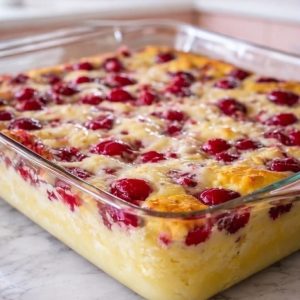
When the waitress approached and mentioned dessert, the word cake hanging briefly in the air like a fragile promise, the boy reacted instantly. He shook his head before his mother could respond, his refusal quick and decisive. It was not a rejection born of disinterest; it was a defense mechanism honed by experience. He had learned that wanting could be dangerous. Wanting meant hoping, and hoping meant the possibility of disappointment. Worse still, disappointment often came with embarrassment, with eyes turning toward you, with pity that felt heavier than hunger. He had learned that lesson early, learned to swallow desire before it could rise to his lips. His gaze flicked toward his mother, searching for reassurance that he had done the right thing. She met his eyes, nodded softly, and felt a familiar ache tighten in her chest. She wanted to tell him it was okay to want things, that birthdays were meant for cake and laughter, not restraint. But the words stayed unspoken, caught between love and reality. The waitress smiled politely and moved on, unaware of the small act of sacrifice that had just taken place. At the table, the air grew heavier, not with resentment, but with unspoken understanding. Mother and son shared a bond forged in scarcity, where love was abundant but resources were not, and where protecting each other often meant denying themselves.
What unfolded next was not dramatic or loud. It did not come with speeches or attention. It arrived quietly, almost invisibly, carried by the awareness of someone who knew how to look beyond appearances. A stranger had noticed the way the boy refused dessert too quickly, the way the mother’s shoulders tensed ever so slightly, the way love and lack coexisted at that small table. There was no stare, no whispered conversation, no display meant to draw notice. Instead, the gesture was simple, deliberate, and deeply human. Outside the diner, resting where it could be seen but not flaunted, stood a bicycle. It was modest but clean, its tires firm, a ribbon tied loosely to the handle catching the light when the door opened. It was not offered with fanfare. There were no questions asked about circumstances, no demands for explanation, no expectation of gratitude. It was simply there, waiting, as if it had always belonged to the boy and had merely been delayed in finding him. The moment carried a profound message without words: you are seen, and you are worthy of kindness without conditions. In a world that often demanded justification for help, this act stood apart in its quiet generosity.
The boy noticed the bicycle hesitantly, as though afraid that acknowledging it might make it disappear. He looked at his mother, confusion and hope flickering across his face. She followed his gaze, and for a moment she could not breathe. Years of careful restraint threatened to overwhelm her as emotion rose uninvited. She hesitated, not out of ingratitude, but out of instinct—the instinct to refuse what she feared she could not repay. But something in her son’s eyes stopped her. This was not charity wrapped in shame. This was kindness offered freely. She nodded slowly, giving permission not just to accept the gift, but to experience joy without apology. The boy stepped outside, his movements cautious at first, as if unsure of the ground beneath his feet. Then he climbed onto the bicycle, his small hands gripping the handles, his feet finding the pedals. The first push was tentative, the second more confident. Then laughter burst from him, unrestrained and pure, echoing across the cracked pavement of the parking lot. The space around him transformed. The diner, the worries, the unspoken fears all faded into the background as he rode in wide, imperfect circles. In those moments, he was not careful. He was not protecting. He was not measuring cost or consequence. He was simply a child, moving forward under his own power, free from the weight he had been carrying far too long.
From the doorway, his mother watched with tears she did not bother to hide. Something inside her loosened, something she had been holding tight for years. It was not relief born of problems solved—she knew their challenges would still be there tomorrow and the day after. But it was relief of a different kind, the kind that comes from realizing the world has not entirely hardened against you. For once, she was not apologizing for what she could not give. She was witnessing what her son had been given without strings attached: a moment of unfiltered joy, a memory untouched by fear or calculation. She felt gratitude not just toward the stranger, but toward the idea that kindness could still exist in simple, unexpected ways. That act did not erase hardship, but it softened its edges. It reminded her that dignity did not have to be sacrificed to accept help, that compassion could be offered without judgment. In watching her son ride, she saw a glimpse of the childhood she had fought so hard to preserve for him, even when circumstances threatened to steal it away.
Long after that day passed, the memory remained vivid. The diner faded into the background of their lives, replaced by other mornings, other challenges, other quiet victories and losses. The bicycle aged, its paint scratched, its tires worn from use, but it never lost its meaning. It became a symbol of something larger than itself, a reminder carried in both their hearts. The boy grew older, but he never forgot how it felt to be seen without being questioned, to be given something without being made to feel small. The mother carried that lesson with her too, drawing strength from it on days when the weight felt unbearable. What stayed with them was not the object, but the truth it revealed: that even in moments shaped by lack, compassion can arrive without warning. That sometimes the smallest gestures carry the greatest power. And that in a world often defined by scarcity, one act of kindness can echo far beyond a single day, reminding those who receive it that they were never as alone as fear once made them believe.